
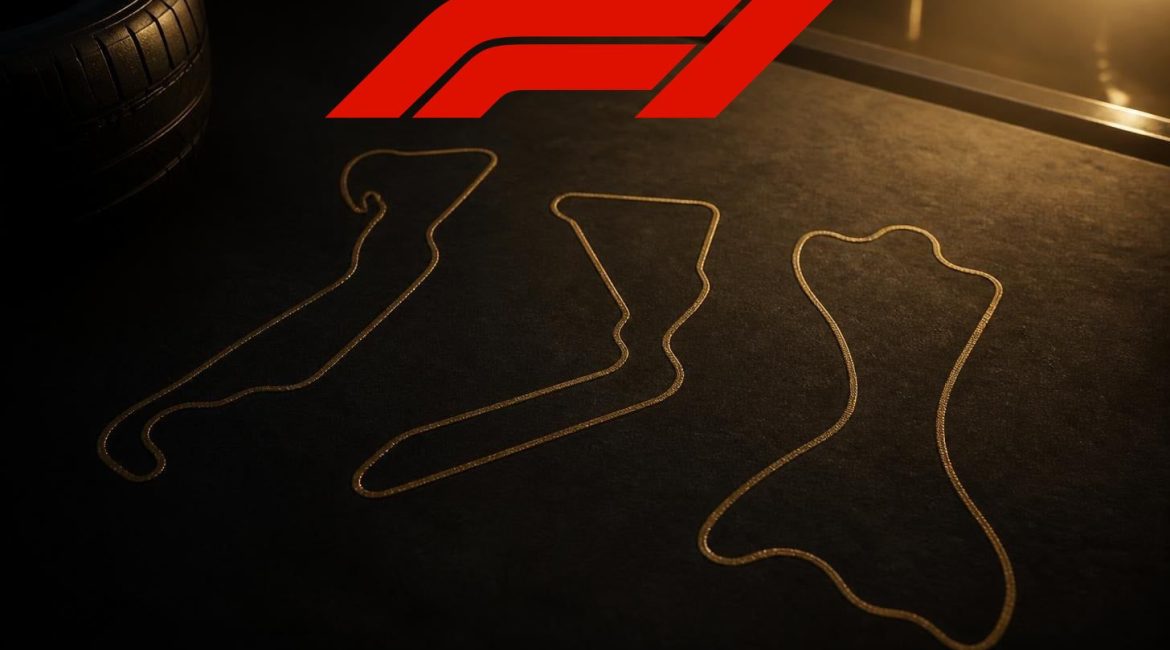
Bahrain, Saudi Arabia, Qatar and Abu Dhabi have helped establish the Gulf as an important part of Formula 1’s international calendar. Although their Grands Prix share a region and frequently take place under floodlights, their circuits present very different technical challenges.
Bahrain tests traction and tyre management. Jeddah demands precision through fast corners close to the barriers. Qatar places sustained loads on tyres through its flowing layout, while Abu Dhabi combines long straights with technical sections.
Understanding these differences explains why a car that performs well at one Gulf circuit might struggle at another.
The four Gulf Formula 1 circuits
The region has four established Formula 1 venues: Bahrain International Circuit, Jeddah Corniche Circuit, Lusail International Circuit and Yas Marina Circuit.
| Circuit | Location | Approx. length | First F1 Grand Prix |
|---|---|---|---|
| Bahrain International Circuit | Sakhir, Bahrain | 5.412 km | 2004 |
| Jeddah Corniche Circuit | Jeddah, Saudi Arabia | 6.17 km | 2021 |
| Lusail International Circuit | Lusail, Qatar | 5.419 km | 2021 |
| Yas Marina Circuit | Abu Dhabi, UAE | 5.281 km | 2009 |
These venues differ in far more than lap length. Their corners, surfaces, braking zones and environmental conditions all influence how teams approach race weekends.
Bahrain: Traction and tyre management
Bahrain International Circuit hosted its first Formula 1 Grand Prix in 2004. Built in Sakhir, its conventional circuit layout includes substantial braking zones, slower corners and acceleration sections that place considerable demands on the rear tyres.
Drivers need a stable car under braking and enough traction to accelerate efficiently out of slower corners. Teams must also manage tyre wear, particularly when the track surface and conditions increase degradation.
This makes race pace and strategy important. A car that produces an impressive qualifying lap may perform differently over a longer race stint if it cannot manage tyre temperatures and wear.
Why evening conditions matter in Bahrain
Bahrain has traditionally hosted races under floodlights, creating a significant difference between some daytime practice conditions and the evening sessions.
Changing track temperatures affect tyre behaviour and car balance. Teams therefore need to interpret practice information carefully rather than assuming that the quickest setup during a hotter session will perform identically later.
When following a race at Sakhir, watch how lap times evolve during longer stints and how teams respond to tyre degradation. Those patterns often provide more useful information about race performance than a single qualifying lap.
Jeddah: High-speed precision
The Jeddah Corniche Circuit made its Formula 1 debut in 2021. Located beside the Red Sea, its approximately 6.17-kilometre layout combines rapid direction changes with the limited margins associated with street circuits.
It has 27 corners, including a succession of fast sections where aerodynamic stability and driver precision matter. Unlike circuits dominated by slow corners and repeated heavy braking, Jeddah requires confidence through long sequences of high-speed turns.
The proximity of the barriers also increases the consequences of mistakes. Drivers must find speed while remaining precise, particularly during qualifying.
Why qualifying is interesting at Jeddah
Qualifying provides an opportunity to compare how effectively drivers approach the circuit’s demanding corners.
A car needs enough aerodynamic stability to maintain speed during rapid changes of direction. At the same time, teams must consider straight-line performance and other requirements when choosing their setup.
Traffic, interruptions and changing track conditions can complicate qualifying sessions. During races, incidents and safety-car periods may also influence pit-stop decisions.
These possibilities make Jeddah a circuit where outright speed is only one part of the competitive picture.
Qatar: Sustained cornering at Lusail
Lusail International Circuit is an important addition to any comparison of Gulf Formula 1 venues. Qatar first hosted the championship in 2021, and its circuit differs substantially from Bahrain and Jeddah.
Originally developed for motorcycle racing, Lusail features a flowing combination of medium- and high-speed corners. Its 5.419-kilometre layout also includes a long main straight.
Rather than concentrating its challenges around repeated slow-corner acceleration, Lusail places sustained demands on tyres through extended sequences of corners.
That characteristic makes tyre preparation, temperature management and consistent aerodynamic performance particularly relevant.
What makes Lusail different?
The circuit’s flowing layout creates prolonged loads on tyres, making their operating conditions an important part of race preparation.
Drivers must maintain rhythm through connected corners, while teams need a setup capable of delivering consistent performance across a complete lap.
The long main straight also presents an overtaking opportunity, particularly into the opening corner. However, a successful attempt still depends on the relative performance of the cars and the circumstances of the race.
When watching Qatar, pay attention to how cars perform through successive corners, how tyre behaviour changes during longer runs and whether drivers can maintain competitive lap times throughout a stint.
Abu Dhabi: Finding the right balance
Yas Marina Circuit hosted its first Formula 1 Grand Prix in 2009 and has regularly staged the championship’s season finale.
The current layout measures approximately 5.281 kilometres, following modifications introduced ahead of the 2021 Grand Prix.
Its combination of long straights, substantial braking zones and technical corners creates a different challenge from those presented by Bahrain, Jeddah and Lusail.
Teams must balance straight-line performance against the aerodynamic grip needed elsewhere on the lap. A setup that improves performance in one section may compromise another.
How the revised layout affects racing
Yas Marina was modified to address several characteristics of its original design, including sections where following another car could prove difficult.
The changes created a faster and more flowing layout. The circuit nevertheless continues to require a compromise between competing aerodynamic and mechanical demands.
Abu Dhabi’s traditional twilight schedule adds another consideration as the race progresses from daylight into darkness.
Track conditions and temperatures can change during that transition, affecting tyre behaviour and potentially influencing race strategy.
When following the Grand Prix, compare straight-line speed with performance through the technical sections. The relationship between those measurements helps explain the different approaches teams take.
How do the four circuits compare?
Their main differences become clearer when viewed together.
| Circuit | Main characteristics | What to watch |
|---|---|---|
| Bahrain | Heavy braking, slow-corner traction and tyre degradation | Long-run pace and tyre management |
| Jeddah | Fast corners, limited margins and a long street-circuit lap | Qualifying precision and incidents |
| Qatar | Flowing medium- and high-speed corners with sustained tyre loads | Cornering consistency and tyre behaviour |
| Abu Dhabi | Long straights, technical sections and changing evening conditions | Setup balance and race strategy |
These are general circuit characteristics, not guarantees about race outcomes.
Car design, tyre compounds, weather, track evolution and individual team decisions can all affect how a race develops.
The comparison is particularly useful because it demonstrates why geographical proximity does not make the four Grands Prix technically interchangeable.
What happened to the Bahrain and Saudi Arabian Grands Prix in 2026?
Formula 1 confirmed in March 2026 that the Bahrain and Saudi Arabian Grands Prix would not take place during their originally scheduled April weekends because of the regional security situation.
The decision was made following consultations involving Formula 1, the FIA and the relevant race promoters. No replacement events were arranged for those April dates.
The cancellations meant Bahrain International Circuit and Jeddah Corniche Circuit did not stage their originally planned 2026 championship rounds.
That distinction matters when reviewing the 2026 season: the circuits remain established Formula 1 venues, but their scheduled races did not proceed as originally planned.
As of 30 September 2026, Qatar and Abu Dhabi remain on the published calendar for 27–29 November and 4–6 December respectively. Those plans remain subject to further official confirmation amid regional uncertainty.
When will Formula 1 return to the Gulf in 2027?
Formula 1 and the FIA announced the 2027 calendar on 16 September 2026. The schedule includes all four Gulf venues, with Bahrain hosting the opening race and Abu Dhabi closing the championship.
| Grand Prix | Scheduled dates | Circuit |
|---|---|---|
| Bahrain | 12–14 March 2027 | Bahrain International Circuit |
| Saudi Arabia | 19–21 March 2027 | Jeddah Corniche Circuit |
| Qatar | 3–5 December 2027 | Lusail International Circuit |
| Abu Dhabi | 10–12 December 2027 | Yas Marina Circuit |
The published calendar also includes Sprint events at Bahrain, Qatar and Abu Dhabi.
Bahrain is scheduled to host pre-season testing from 24 to 27 February before the opening Grand Prix in March. The championship then travels to Jeddah for its second round.
Qatar and Abu Dhabi are positioned at the end of the calendar, with Yas Marina scheduled to host the final race.
These dates reflect the officially announced schedule and should be checked against Formula 1’s latest calendar before making travel arrangements.
What should viewers watch at each Grand Prix?
Understanding a circuit’s characteristics can make practice, qualifying and race sessions more informative.
At Bahrain, compare qualifying speed with longer practice runs. Pay particular attention to rear-tyre management and changes in performance as track temperatures fall.
At Jeddah, watch qualifying sector times and the way drivers negotiate the fast sequences of corners. During the race, incidents and interruptions may become important strategic considerations.
At Qatar, focus on sustained cornering performance and tyre behaviour. The flowing layout allows viewers to observe how consistently a car performs through several connected corners.
At Abu Dhabi, compare straight-line speed with performance in the technical sections. Changes in conditions between the daylight start and the evening stages can add another strategic dimension.
None of these indicators independently determines the result. Together, however, they offer a more informative way to understand what each circuit demands.
Four Gulf venues provide four distinct tests of Formula 1 machinery. Their differences are clearest when attention moves beyond the floodlights and desert surroundings to the racing characteristics of each track.

About Me
I have spent the past two decades immersed in the world of online gambling, building extensive experience as a casino and sports betting writer. What started as an interest in the rapidly growing digital gaming industry has developed into a long-term career focused on researching, analyzing, and explaining the constantly changing world of iGaming. Throughout my career, I have covered everything from online casino reviews and slot games to sports betting, live casino, bonuses, payment solutions, and industry developments.
After 20 years in the industry, I understand that good gambling content is about much more than simply describing a casino or a betting site. Readers need clear information, honest opinions, detailed research, and content they can trust. This philosophy is at the heart of everything I write. I combine my practical industry knowledge with SEO expertise to create content that is informative, engaging, and designed to provide genuine value to both readers and brands.
The iGaming industry continues to evolve at an incredible pace, and staying ahead requires constant learning. I closely follow new technologies, emerging markets, changing player preferences, and the latest developments across the global betting and casino landscape. My goal is simple: to use my experience and knowledge to turn complex industry information into clear, reliable, and useful content for every reader.